
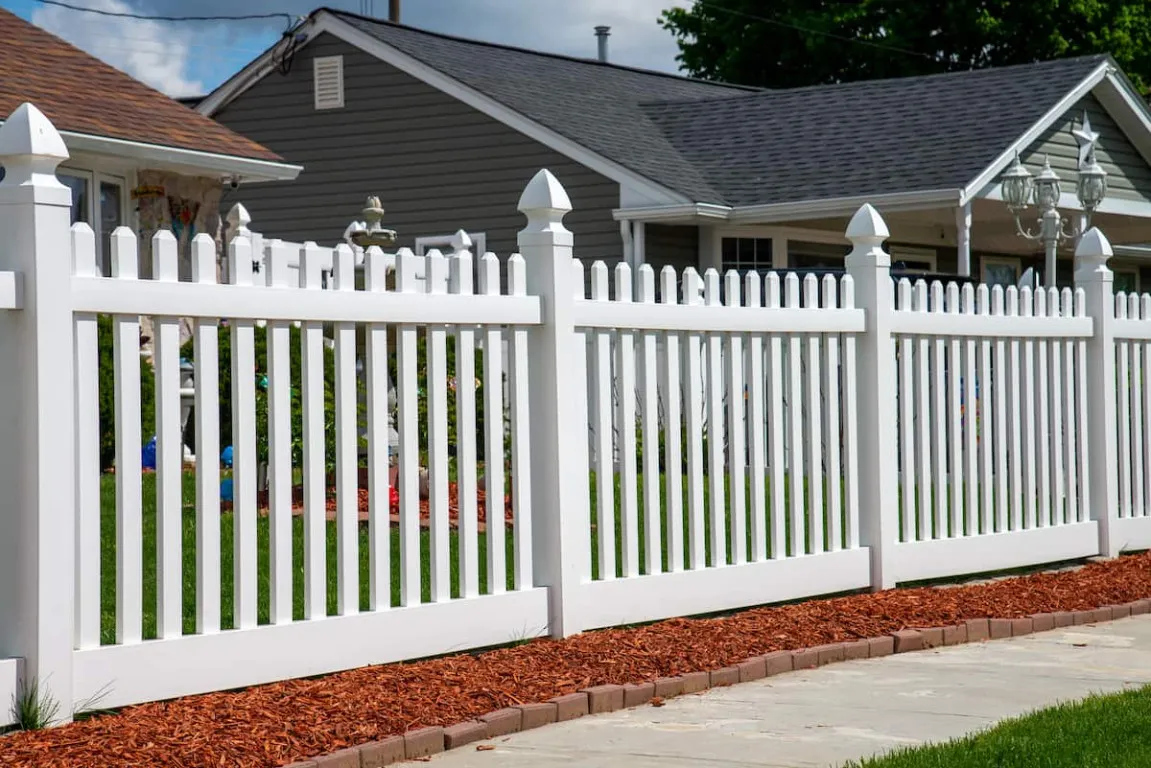
A house fence demarcates the property while maintaining its residents' privacy and security. The right fence height can make the house design look neater and more harmonious.
Therefore, the ideal height of a house fence should match the needs and conditions of the surrounding environment. So, what is the right fence height to keep a house comfortable, safe, and visually appealing? Read the explanation below.
Ideal Fence Height
Fence height does not have to be the same for every house because each house’s needs and conditions differ. Some houses need a short fence to keep the facade visible, while others need a taller fence for privacy and security.
Here are some ideal house fence heights you can use as a reference based on your needs:
1. Based on the Average Height of Adult Men in Indonesia
Based on the average height of adult men in Indonesia, a 1.7–1.8-meter-tall fence could be a good choice. This height is roughly equivalent to an adult’s height, helping block outside views while maintaining residents’ privacy.
2. For Type 36 Houses
For Type 36 houses, a 0.9–1.2 meters-tall fence is a suitable choice. This height is sufficient to enclose the yard without obscuring the overall appearance of the house. As a result, the front of the house stays open and does not feel cramped, especially on a smaller lot.
3. For Less Secure Neighborhoods
If your house is in a neighborhood prone to theft, you might want to consider a 2–2.5-meter-high fence. A tall fence makes it harder for outsiders to see into or enter your house. You can also use a solid wall to restrict access while maintaining the residents’ privacy.
Read also: 7 Inspirations for Modern Fence Designs for Your Home
4. For Houses with a Front Width of Less Than 10 Meters
Houses with a front width of less than 10 meters are best suited for a 1–1.2-meter-high fence. This height is sufficient to enclose the yard without overly blocking views of the house. That way, the house remains clearly visible from the street, and the front looks spacious rather than cramped.
5. For Houses with a Spacious Front Yard
If the front yard is spacious enough, a fence taller than 1.5 meters is a good option. This height gives the property a more defined look without reducing the spaciousness. For an attractive look, choose a minimalist fence design that complements the building’s architecture.
6. To Protect Residents’ Privacy
A 1.5–2-meter-tall fence allows residents to go about their daily activities more freely without being exposed to outside view. This height is ideal for those who want to maintain privacy, especially in yards or patios adjacent to the street.
7. To Restrict Access by Strangers
If security is a priority, consider a 1.7–2.5-meter-high fence to prevent outsiders from easily entering the yard. Security can also be enhanced by installing additional bars or an alarm system to detect unwanted access.
8. To Set Boundaries Between House Lots
A 1–1.2-meter-high fence can serve as a boundary between one lot and another. This height makes the property line easy to recognize without blocking the surrounding view.
Read also: 10 Minimalist & Iron-Free Wall Fence Ideas, Better Privacy!
Tips for Choosing a House Fence
Choosing a house fence involves more than just deciding on the height and style you prefer. Here are some tips for determining the ideal fence height that you can apply before building your fence:
1. Determine the Fence’s Primary Function
Determine the fence’s function before choosing its height. A short fence is sufficient for enhancing gardens or separating plants, while a taller fence is suitable for maintaining privacy and limiting external access.
2. Consider the Surrounding Environment
The conditions around your house should be a key consideration when selecting a fence height. If your house is in a densely populated area that is easily accessible to outsiders, consider a fence at least 1.8 meters high to enhance security. Conversely, in a relatively safe and quiet neighborhood, a lower fence may be a suitable option.
3. Match the Fence Height to the Building’s Design
Choose a fence height that complements the house’s design to ensure a harmonious appearance. A fence that is too tall, especially one made of natural stone, can overshadow the building’s beauty. Therefore, adjust the fence's size and style to match the house’s architectural style.
4. Check Local Zoning Regulations
Before deciding on the fence height, first check the applicable regulations in your neighborhood. Some residential areas set limits on fence dimensions to keep the neighborhood's appearance harmonious and compliant with regulations.
5. Calculate Construction Costs
Adjust the fence height to fit your available budget. Taller fences typically require more materials and have higher labor costs. However, costs also depend on the material type and design you choose. Therefore, calculate estimated costs early to ensure fence construction stays within budget.
Want to Build a Wall Fence for Your House? Use High-Quality Materials
To ensure your house's wall fence remains sturdy and durable, pay attention to the quality of the materials used from the start of construction. One thing you should not overlook is choosing cement that can protect the structure from water seepage.
For this purpose, Semen Merah Putih Watershield is an excellent choice. This super-premium, multipurpose cement features water-repellent technology that protects against water seepage from three directions: exterior, interior, and ground. This protection helps keep the structure strong and durable while requiring minimal maintenance.
In addition to building retaining walls, Semen Merah Putih Watershield can also be used for various construction projects, such as building foundations, concrete slabs, concrete pouring, bricklaying, plastering, and finishing. With its wide range of applications, this product can support various needs in your home construction.
For more information about products and construction solutions tailored to your project’s needs, please contact us. The Semen Merah Putih team is ready to help you find the right materials to support high-quality construction.
Read also: Guide to Know the Ideal House Height & How to Calculate It