
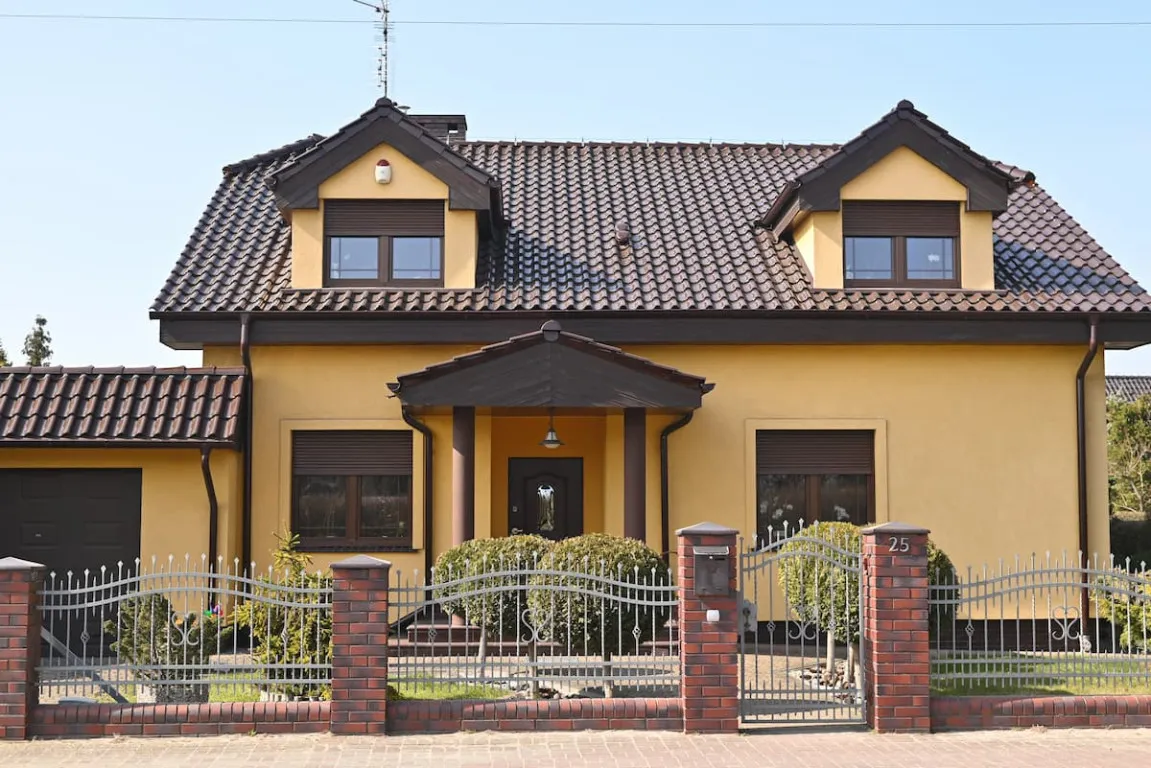
Landed houses are still a favorite choice for many people because they give a personal touch to the living space. With a landed house, you can freely manage activities, from parking vehicles, arranging the yard, to planning renovations on the land you directly own.
It is no wonder that landed houses are often considered comfortable long-term residences as well as valuable assets. If you plan to choose a landed house as a place to live or invest in, first take a look at its characteristics, advantages, disadvantages, and tips for choosing the modern house design that is ideal!
What Is a Landed House?
A landed house is a type of residence built on a plot of land with direct ownership of that land. A landed building is not situated above another housing unit and does not have vertical levels like an apartment or condominium. Each landed house generally has direct access to a public road and has clearly defined land boundaries, either in the form of fences or other markers.
The type of ownership of a landed house also varies, depending on the land status and the permits held. That is why understanding the definition of a landed house is not enough just from the building's shape, but also from aspects such as location, neighborhood management, and legality.
Characteristics of a Landed House
A landed house has a distinctive structure and building pattern. Here are some characteristics of a landed house that differentiate it from other types of housing:
1. Built Directly on the Land
The main characteristic of a landed house is that the building stands directly on private land. This makes it easier for you to go in and out of the house since it does not rely on shared facilities. Not only that, but you are also free to use the yard as needed by your family.
2. Has Clear Land Boundaries
Landed buildings generally have fences, stakes, or other markers to mark the land boundaries. These boundaries are recorded in ownership documents, making your house area more defined. Clear boundaries are important to avoid disputes and make renovations easier.
3. Direct Access to Streets or the Surroundings
A landed house makes it easier to go in and out, so you don't need to use shared facilities like elevators or common corridors. This access also makes your mobility easier, including when receiving guests, getting packages, or carrying out renovations.
4. Having a Spacious Outdoor Area
A landed house tends to have an outdoor area, although not always large. This area can be a front yard, backyard, or leftover land on the side of the house for air circulation, a garden, or a drying area. Having an outdoor space helps your home feel fresher and less stuffy.
5. Flexible in Redesign Planning
Owners of landed houses have greater control over interior and exterior changes. You can rearrange rooms, replace materials, or carry out repairs independently. However, in some areas, such as gated communities, renovations may still be limited by developer regulations or environmental rules, such as facade regulations, building height, or project working hours.
Read also: Building Information Modeling: Definition & Its Features
Types of Landed Houses
Landed buildings come in various forms and have different environmental management systems. These differences can affect costs, comfort, living rules, and the potential for property value appreciation. Here are the types of landed houses you need to know:
1. Single-Family House (Detached House)
A single-family house is a standalone home built on one plot, not attached to any other house on either side. Because it does not share walls with neighbors, privacy is usually higher, and air circulation tends to be better. This type of house is suitable for those who want a quiet atmosphere and a comfortable outdoor space.
2. Semi-Detached House
A semi-detached house consists of two adjacent units that share one common wall. Despite sharing a wall, each house still has its own land and access. This type of house is often chosen because it is more land-efficient compared to a detached house. Semi-detached houses are commonly found in middle-class residential areas with more affordable prices.
3. Row Houses
Row houses are homes built in a row, attached on the left and right sides, except for the units at the ends. Because they share walls with two neighboring houses, the land usage is generally more efficient, and prices tend to be more affordable. However, air circulation and natural light need to be considered, especially for units with minimal side openings.
4. Maisonette House
A maisonette is a landed house that has two or more floors in a single residential unit. This type of house is designed to separate the functions of spaces, such as public areas on the lower floor and private areas on the upper floor.
Maisonette houses are suitable for families who need more space without expanding the land horizontally. In terms of efficiency, this concept certainly provides comfort in daily activities.
5. Town House
A townhouse is usually located in urban areas or near the center of activity. This type of house is often built within small complexes, offers guaranteed security, and is targeted at upper-middle-class residents or families who need quick access to city facilities. Because of its strategic location, its prices tend to be higher than those of landed houses on the outskirts.
6. Cluster House
A cluster house is a landed house located within a closed area with a one-gate system. The design of houses in a cluster tends to be similar, and there are rules regarding renovations, facade appearance, and neighborhood order. The advantages of this type of cluster are security and a tidy environment, but there are usually management fees and certain restrictions for residents.
Read also: 10 Design Inspirations for Concrete Countertop and Sink
Advantages and Disadvantages of Landed Houses
Before choosing a landed house, you need to understand its advantages and disadvantages. This will help you assess whether the house truly suits your needs, lifestyle, and financial plan.
Advantages of Landed Houses
Here are the advantages of landed houses that you need to know:
- More privacy: Household activities are not shared much with other residents.
- More flexibility in arranging space: Room layout can be easily adjusted to the family's needs.
- Opportunity to have an outdoor area: The yard can be used for a garden, drying clothes, or a play area.
- Easier access in and out: Not dependent on elevators, corridors, or shared facilities.
- More flexible for renovations: Building changes can be made in accordance with regulations and permits.
- Suitable for long-term living: The house can be adjusted to accommodate changing needs.
- More independent maintenance control: You are free to determine the standards for upkeep and repairs.
- Good asset value potential: The land generally adds value, depending on the location and area.
Disadvantages of Landed Houses
Here are the disadvantages of landed houses that you need to understand:
- Environmental risks are more noticeable: Flooding, noise, or security largely depend on the location.
- If far from the city center, mobility is more challenging: Travel time and transportation costs may increase.
- Environmental quality is not always consistent: It depends on the management of local residents or developers.
- Parking and road access can be limited: Generally occurs in dense residential areas or narrow streets.
Tips for Choosing a Landed House
Choosing a landed house is a big decision that affects your long-term life. Here are some tips to help you determine the most suitable landed house:
1. Determine the Purpose of Purchase
When buying a house, make sure you determine the purpose from the start. Will the house be your primary residence, a home for your parents, or an investment asset? This purpose will influence criteria such as location, building size, number of rooms needed, and financing strategy.
2. Prioritize Location and Access
Consider the distance to your workplace, schools, public transportation, as well as important facilities such as hospitals and daily necessities centers. You also need to pay attention to the quality of the road leading to the house, traffic conditions, and the potential for area development.
3. Check the Environmental Conditions
Aside from access to public facilities, you also need to consider environmental conditions, such as drainage, cleanliness, street lighting, and security. If possible, you can have a brief conversation with local residents or security personnel to get a more honest picture of the area's conditions.
4. Inspect the Building Condition
Make sure you examine the building condition carefully. Pay attention to wall cracks, moisture in the corners of rooms, the condition of the ceiling, as well as the quality of the floors and tiles. Also, ensure that the electrical installations are safe and water flow is smooth. For second-hand houses, check for signs of old leaks such as stains on the ceiling or bubbling paint.
5. Ensure Legality and Complete Documentation
Before deciding to buy a house, first check the status of the certificate, the conformity of the land and building size, as well as supporting documents such as property taxes (PBB) and valid building permits. If you are using a mortgage, the bank usually conducts an inspection. If necessary, seek the assistance of a notary or a competent party to ensure the process is safer.
A comfortable landed house is not just about a strategic location or attractive design, but also about a well-thought-out decision from the start. Once you have found a suitable landed house, the next step is to ensure the building is strong and durable, as the structure's quality will greatly affect long-term comfort.
This is where the choice of building materials becomes important, including the use of the right cement to ensure the structure is sturdy, neat, and resistant to damage caused by moisture. For extra protection, you can use Semen Merah Putih Watershield.
Semen Merah Putih Watershield features water-repellent technology that protects against water seepage from the outside, the inside, and the ground (capillary water), while also helping reduce moisture-related impact.
With Semen Merah Putih Watershield, your building is better protected and ready to meet your needs for a long time. If you want product recommendations tailored to your project requirements, contact us immediately for a consultation!
Read also: 12 Low-Wall Fence Designs for Minimalist & Modern Aesthetics