
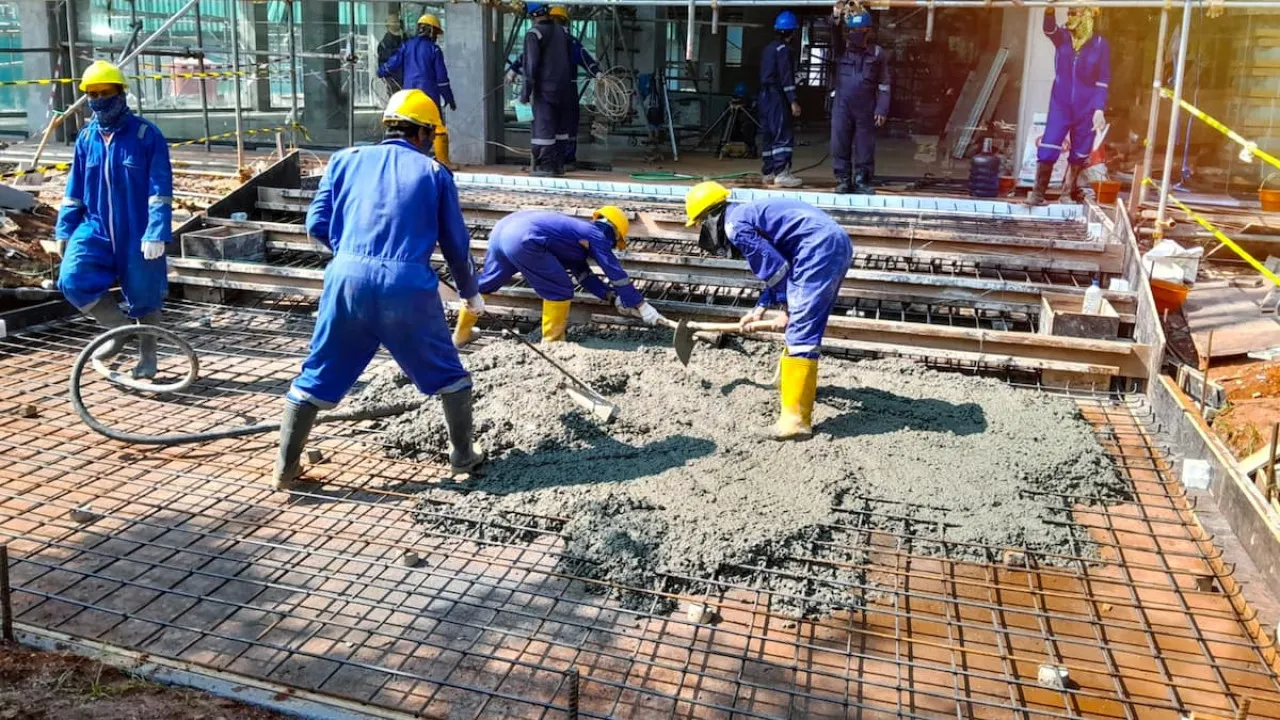
Concrete pouring requires the right process to create a strong, durable building structure. From preparing materials and choosing pouring methods to curing, every step needs attention to achieve the best result.
Let's dive into this article to understand the stages and key things to watch for in concrete pouring work.
What Is Concrete Pouring?
Concrete pouring is the process of creating a concrete structure by pouring fresh concrete into formwork prepared to the required shape. The steps include preparing the area, setting up the molds, pouring the concrete, leveling and compacting it, and then waiting for it to harden before removing the formwork.
This method is commonly used to make various building parts, such as columns, beams, floors, and walls.
Types of Building Pouring Techniques
Choosing a building pouring technique should match the project's requirements, from the work location and structure type to the desired final result. Here are some commonly used casting methods:
- Cast in Place (In Situ): Concrete is poured directly on site using formwork. This method suits structures with shapes that need special adjustments.
- Precast: Concrete components are made in a factory first, then installed on site. This technique speeds up construction and helps maintain concrete quality.
- Dry Mix Process: A dry concrete mix is combined with water on site. This method is often used for limited areas or sprayed concrete work.
- Ready-Mix Concrete: Concrete is made at a batching plant with the right mix, then delivered to the project site, making pouring more convenient and producing more consistent concrete quality.
- Hydrodemolition: Uses high-pressure water to clean or break down old concrete before repairs.
- Asphalt Concrete: Usually used for roads, but can also be used for parking lots or vehicle access areas.
- Lightweight Concrete: Uses lightweight materials to reduce structural load and help improve building insulation.
Materials Used in Concrete Pouring Work
The pouring process requires several supporting materials to ensure the concrete has strength and a good finish. Choosing the right concrete mix also affects the quality of the structure produced. Here are some common materials used in concrete work:
- Concrete: Concrete is the main casting material and is made of cement, sand, gravel, and water. Adjust the composition of each material to produce a strong structure.
- Formwork (Concrete Molds): Formwork shapes and holds the concrete while it is still in liquid form. Materials can include wood, steel, or other materials, depending on the project needs.
- Reinforcing Steel: Reinforcing steel strengthens concrete, especially to withstand tensile forces, making the structure more robust.
- Additional Materials and Supporting Equipment: Some concrete casting work requires extra materials, such as additives to control the concrete's hardening process. Concrete vibrators are also used to help compact the mixture.
- Clean Water: Water is used in the concrete mixing process and also helps keep the concrete moist during curing after pouring.
- Safety Gear: Helmets, gloves, and safety shoes are needed to keep workers safe during the pouring process.
Read also: How Much Sand Requirements for Cast Per m3? Here's the Answer!
Concrete Pouring Steps
Pouring concrete must be done step by step so the resulting structure remains strong and meets quality standards. Each stage plays an important role, from preparation to final inspection, to ensure concrete quality.
Meanwhile, the cost of manual concrete work can vary depending on several factors, such as the area to be poured, the number of workers, the type of materials used, and the difficulty level of the job. Here are the concrete pouring steps to keep in mind:
1. Preparation
Before the casting process begins, prepare the work area. Make sure the location is clean of debris, plants, or other objects that might interfere with the work. At this stage, carefully plan the manual concrete casting measurements so the mixture has the right composition.
Next, install the formwork according to the design and ensure it is stable and neat so it can hold the concrete when poured.
2. Reinforcement Installation
Install the steel reinforcement according to the drawings or design. Make sure the reinforcement is in the correct position and securely tied with wire so it does not move during casting.
Also, ensure enough space between the reinforcement and the formwork so the concrete can fill all parts evenly while protecting the reinforcement from corrosion.
3. Concrete Mixing
Once preparation is complete, mix the concrete with the right materials to create a strong structure. Make sure the mixture is fully blended before use. Next, pour the concrete into the formwork gradually and compact it using a concrete vibrator to prevent air gaps and to make the casting smoother.
4. Drying and Hardening
After pouring, leave the concrete to harden completely. Avoid putting too much weight on it or doing further work while the concrete is still in the early hardening stage, as this can affect the final results.
The hardening process usually takes a few days, and it can take more than seven days, depending on the concrete condition and the building's structural requirements.
Read also: Characteristics and Ideal Thickness of Second-Floor Slabs
5. Removing the Formwork
Once the concrete has hardened enough, you can remove the formwork. Remove it slowly to keep the concrete's shape and surface intact and prevent damage.
6. Finishing
After the concrete is shaped, move on to the finishing stage to improve its appearance and surface quality. You can level or smooth the concrete with certain tools to make it look neater. If needed, add a protective layer or paint to keep the concrete looking good and more resistant to the environment.
7. Final Inspection
After the casting process is complete, check that the concrete meets the required standards. Check the surface condition, structural dimensions, and concrete strength to make sure there are no issues that could affect the building's quality.
That concludes the discussion about the definition, types, and stages of concrete pouring work. Each step plays an important role in the building's final quality, from area preparation, formwork and reinforcement installation, and the casting process to the inspection stage.
To achieve optimal construction results, selecting the right concrete materials should also be a major consideration. Beton Merah Putih offers an innovative concrete solution designed to support various construction needs, including precast concrete.
Beton Merah Putih produces precast concrete through a controlled process, delivering components with consistent quality and strength, ready for use in various projects. Beton Merah Putih also provides a variety of other concrete solutions, such as ready-mix concrete and aggregates, tailored to construction needs.
With a range of quality options, these concrete products can be used for various projects, from building high-rise buildings, industrial areas, and housing to infrastructure like roads and public facilities.
Make sure your project is supported by the right concrete materials so the construction process runs more effectively and the results are maximized. Contact us now to get the best construction solutions with Beton Merah Putih. We are ready to help provide quality materials and professional services to support the success of every project.
Read also: The Right Ratio of Cement and Sand for a Sturdy Building